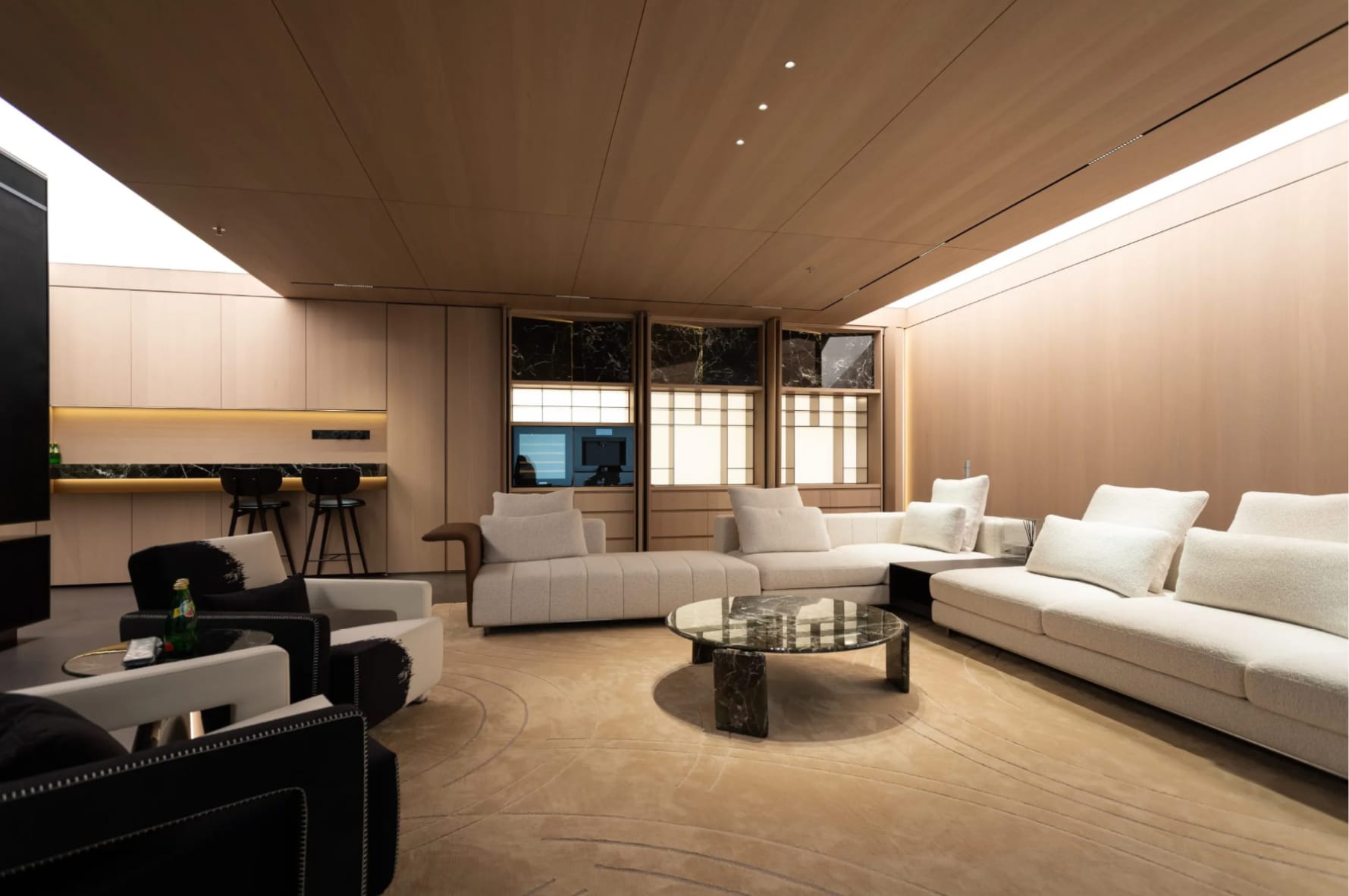
Southern California homeowners have a unique advantage: a climate that invites outdoor living almost every day of the year. The most compelling luxury kitchens in LA and Orange County embrace this by dissolving the boundary between indoor cooking spaces and outdoor entertaining areas, creating a continuous experience that maximizes both the home and its setting.
The Seamless Transition
The key to successful indoor-outdoor kitchen design is making the transition feel effortless. This starts with architecture: large-format sliding or pocket doors — 10 to 20 feet wide — that open completely, removing the wall between inside and outside. When these doors are open, the kitchen extends into the outdoor space as a single, unified room.
We often specify multi-panel folding glass systems or pocket sliding doors that stack completely out of view. The result is a kitchen that can be fully enclosed for cooler evenings or completely open to the patio, garden, or pool area during Southern California’s many warm months.
Material Continuity
The strongest indoor-outdoor designs maintain material continuity across the threshold. When the same flooring, countertop material, or cabinetry finish continues from inside to outside, the transition disappears visually:
Flooring: Large-format porcelain pavers (24x24” or larger) that work in both interior and exterior applications create a continuous ground plane. The same tile in a slightly textured finish for outdoor slip resistance maintains visual unity while meeting practical requirements.
Countertops: Extending your interior countertop material to an outdoor bar or prep station ties the spaces together. Quartzite and granite perform well in outdoor applications, while some engineered stones require covered installations to protect from UV exposure.
Cabinetry: While interior and exterior cabinets serve different purposes, coordinating the color palette and hardware creates a sense of design intention. Marine-grade stainless steel and weather-resistant polymers for exterior cabinetry can be color-matched to interior finishes.
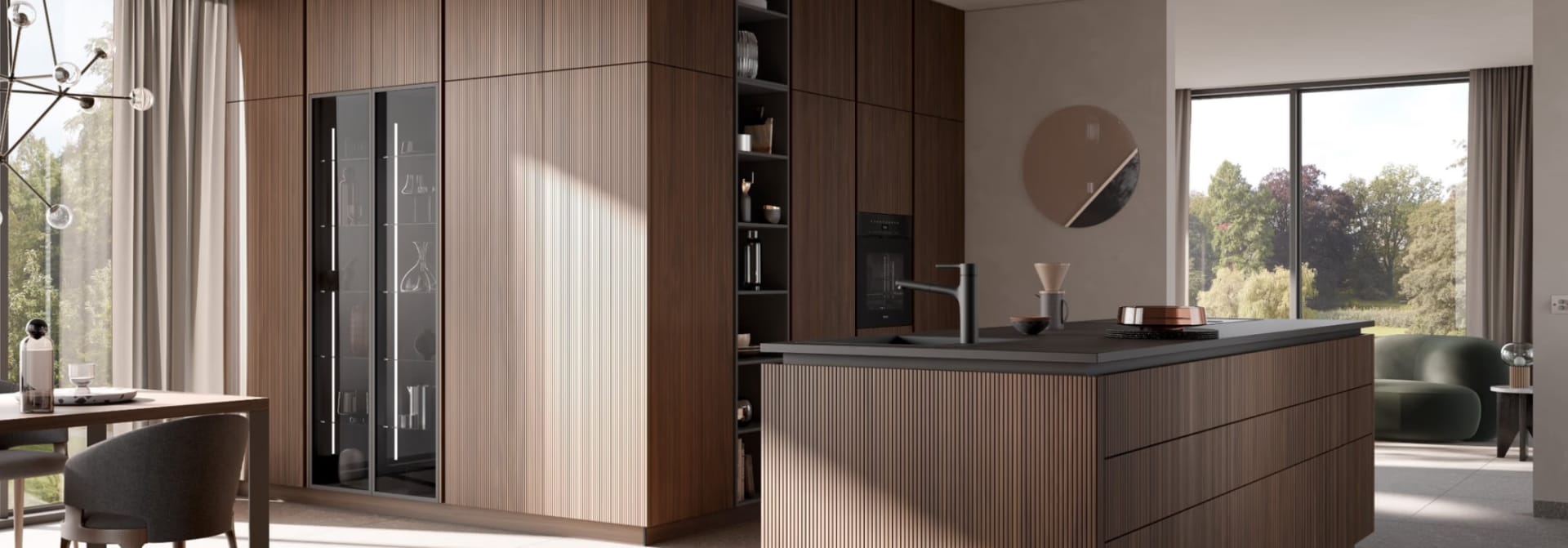 Material continuity between indoor and outdoor spaces creates a seamless visual flow.
Outdoor Kitchen Essentials
A luxury outdoor kitchen in Southern California should be more than a grill on a counter. The best outdoor kitchens include:
A professional-grade grill — brands like Lynx, Hestan, and Kalamazoo offer built-in grills that rival indoor cooking performance. A 36” or 42” grill with infrared burners provides versatility for everything from steaks to pizza.
Outdoor refrigeration — undercounter refrigerator drawers and beverage centers keep ingredients and drinks accessible without trips inside. Brands like True and Perlick manufacture purpose-built outdoor units rated for the elements.
Adequate prep space — at least 4 feet of counter space on each side of the grill for prep and plating. An outdoor sink with hot water eliminates the need to carry dishes back and forth.
Shade and shelter — a covered structure (pergola, roof extension, or retractable awning) protects the cooking area from direct sun and occasional rain, extending the usable seasons and times of day.
Entertaining Flow
The layout should support natural entertaining flow. When guests arrive, they should be able to move intuitively between the indoor kitchen, outdoor cooking area, dining space, and social zones (lounge, pool, fire pit). We design these spaces with clear sightlines from the cooking area to all gathering points — so the cook is always part of the party.
A well-positioned island or bar counter at the indoor-outdoor threshold serves as the social hub. Guests naturally gather here, creating a connection between those cooking and those relaxing — the same dynamic that makes the kitchen island the center of indoor entertaining. This kind of seamless flow is one of the defining trends in luxury kitchen design for 2026.
Technical Considerations
Whether you’re planning a full kitchen remodel in Orange County or updating an existing space, indoor-outdoor kitchen design requires careful attention to technical details:
Drainage: The floor plane must slope subtly away from the interior to prevent water intrusion during rain. A linear drain at the threshold provides a clean solution.
Electrical and gas: Outdoor kitchen areas need dedicated electrical circuits (for refrigeration, lighting, and outlets) and gas lines (for the grill and optional pizza oven or fire features). All outdoor electrical must be GFCI protected per California building code.
Lighting: Outdoor lighting design should match the warmth and quality of the interior. We use a combination of task lighting (over the grill and prep areas), ambient lighting (integrated into the structure), and landscape lighting to create atmosphere after dark.
Frequently Asked Questions
How much does an indoor-outdoor kitchen remodel cost in Los Angeles?
A luxury indoor-outdoor kitchen in the LA and Orange County market typically ranges from $120,000 to $350,000 or more, depending on the scope of the outdoor kitchen, the door system chosen, and the level of material finish. The multi-panel glass door systems alone can range from $15,000 to $60,000 depending on span and manufacturer.
What materials work best for outdoor kitchen countertops in Southern California?
Quartzite and granite are the top choices for outdoor countertops because they resist UV fading, heat, and moisture. Engineered quartz can work under covered structures but is not recommended for direct sun exposure. For a cohesive look, many homeowners extend the same stone from their indoor kitchen to the outdoor prep area.
Do indoor-outdoor kitchens require special permits in Orange County?
Yes. Most indoor-outdoor kitchen projects require building permits for structural modifications (removing walls, installing large door systems), electrical work, gas line extensions, and plumbing. Your contractor should handle the permitting process with the local building department to ensure all work meets current California code requirements.
Can I add an indoor-outdoor kitchen to an existing home, or does it require new construction?
Most existing homes in Southern California can be retrofitted for indoor-outdoor kitchen living. The key requirement is a kitchen wall that faces a patio, deck, or yard where the wall can be opened with a folding or pocket door system. A structural engineer evaluates load-bearing considerations, and the project is designed around your home’s existing footprint.
Design Your Indoor-Outdoor Kitchen
Southern California's climate is your greatest design asset. Let's explore how to connect your kitchen to the outdoors in a way that transforms how you live and entertain.