For homeowners spec’ing a luxury kitchen, the choice between frameless vs framed cabinets is one of the first technical decisions that quietly shapes everything else — interior clearance, door alignment, hardware options, and how the cabinetry reads against your home’s architecture. Yet most cabinet bids gloss over this distinction, leaving homeowners to discover the difference only after installation. This guide breaks down what each construction type actually is, how they compare on daily use, design fit, and cost, and which one tends to suit luxury kitchens in LA and Orange County.
What Are Frameless Cabinets? (Full-Overlay / European Construction Explained)
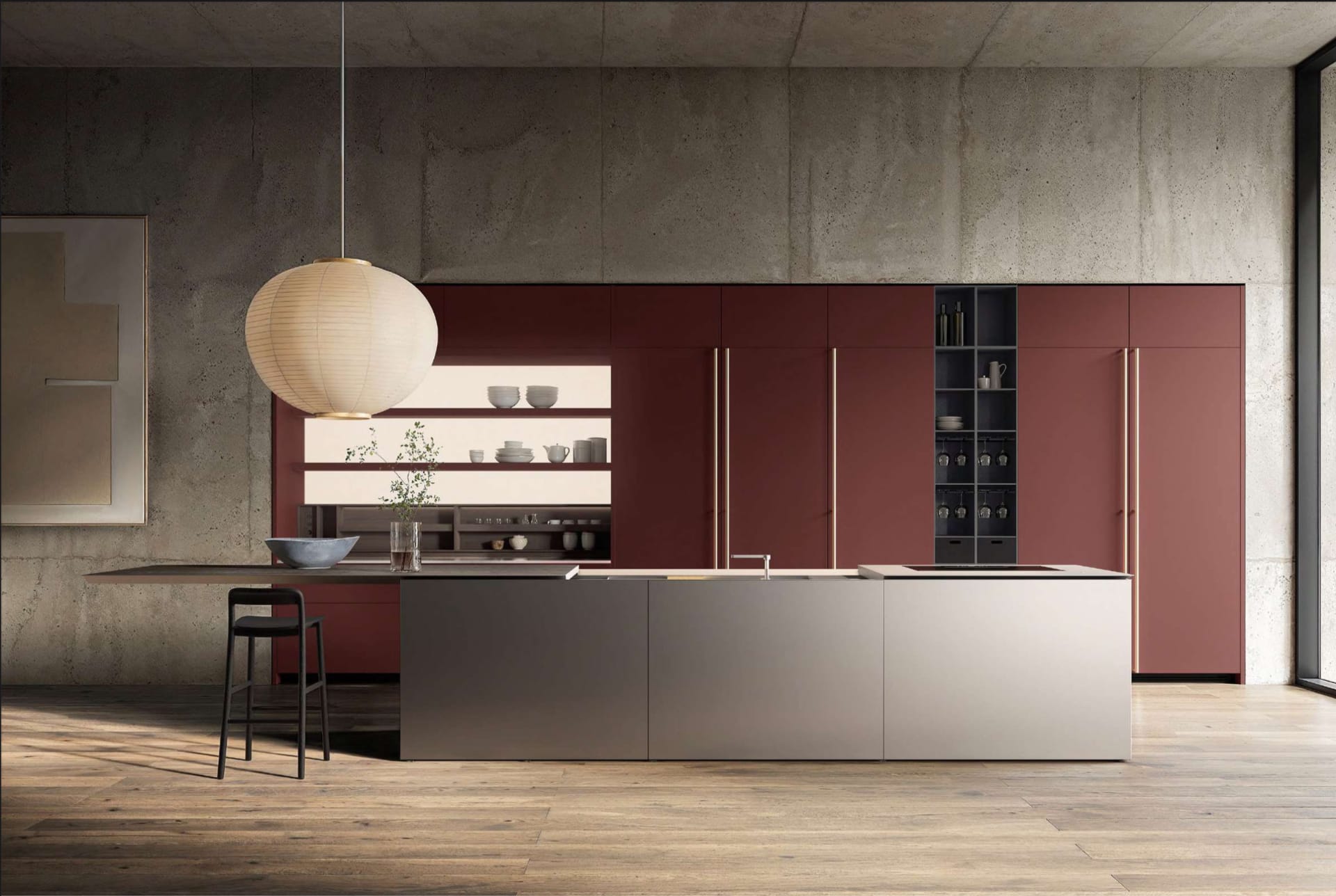
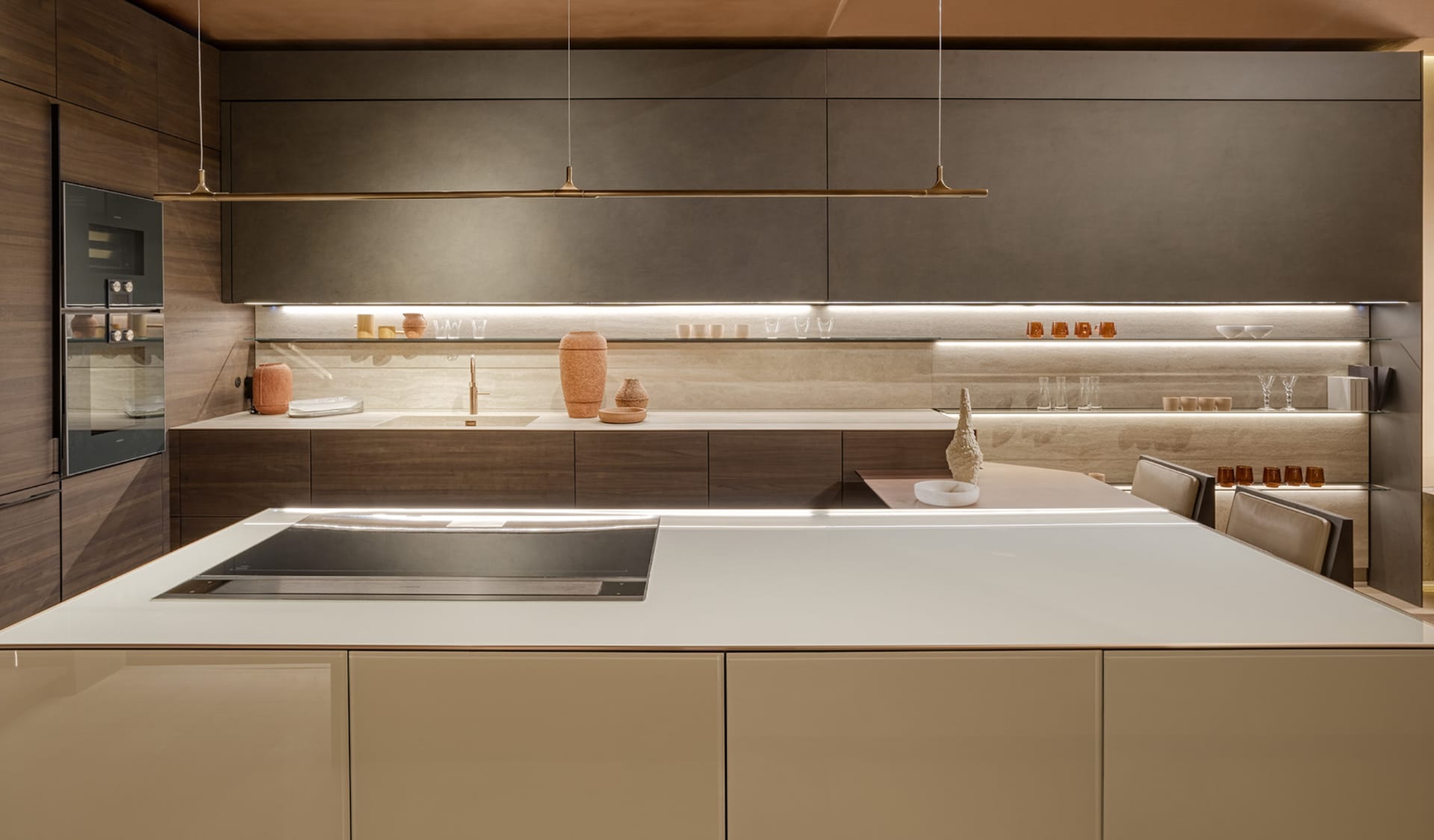
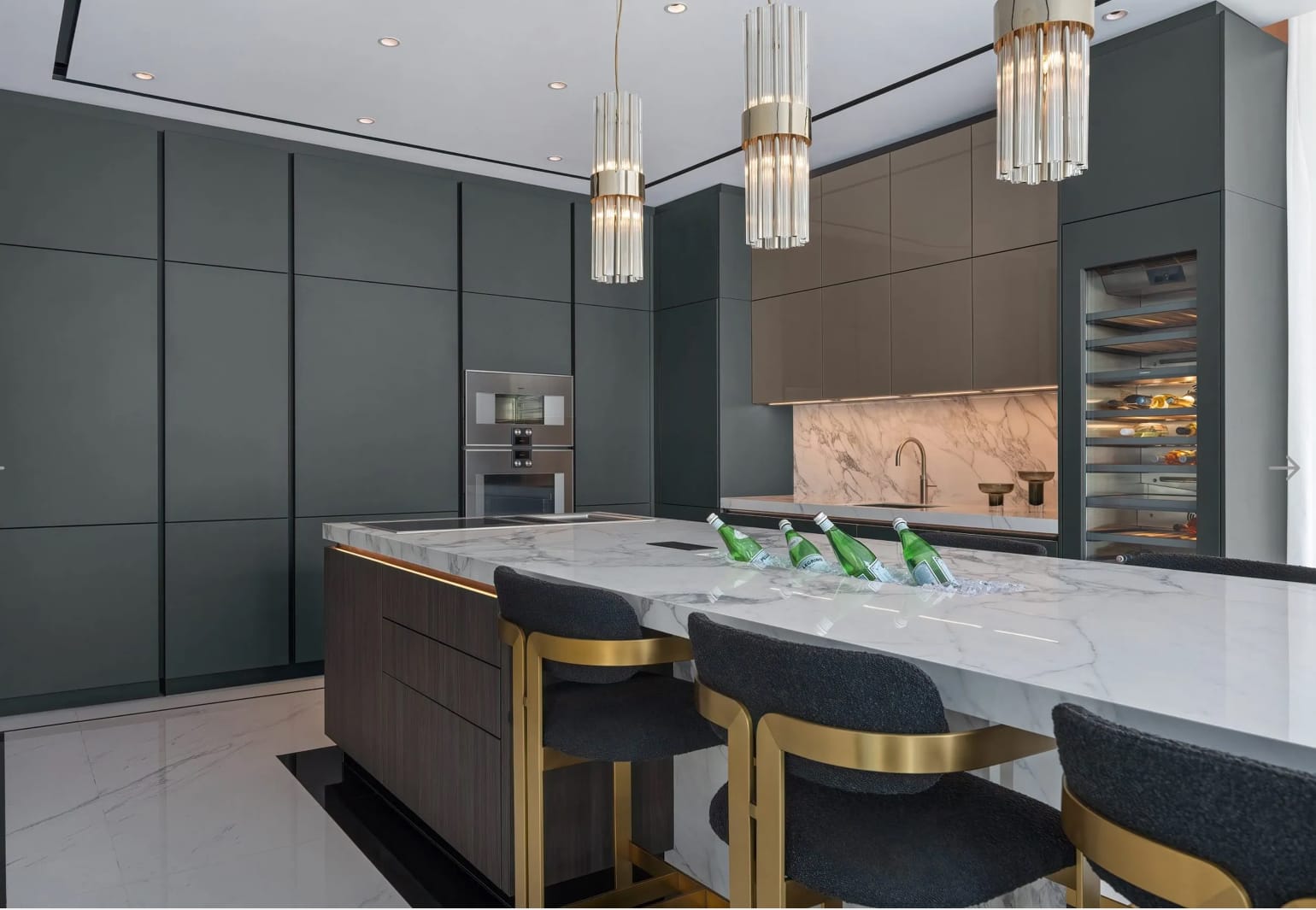
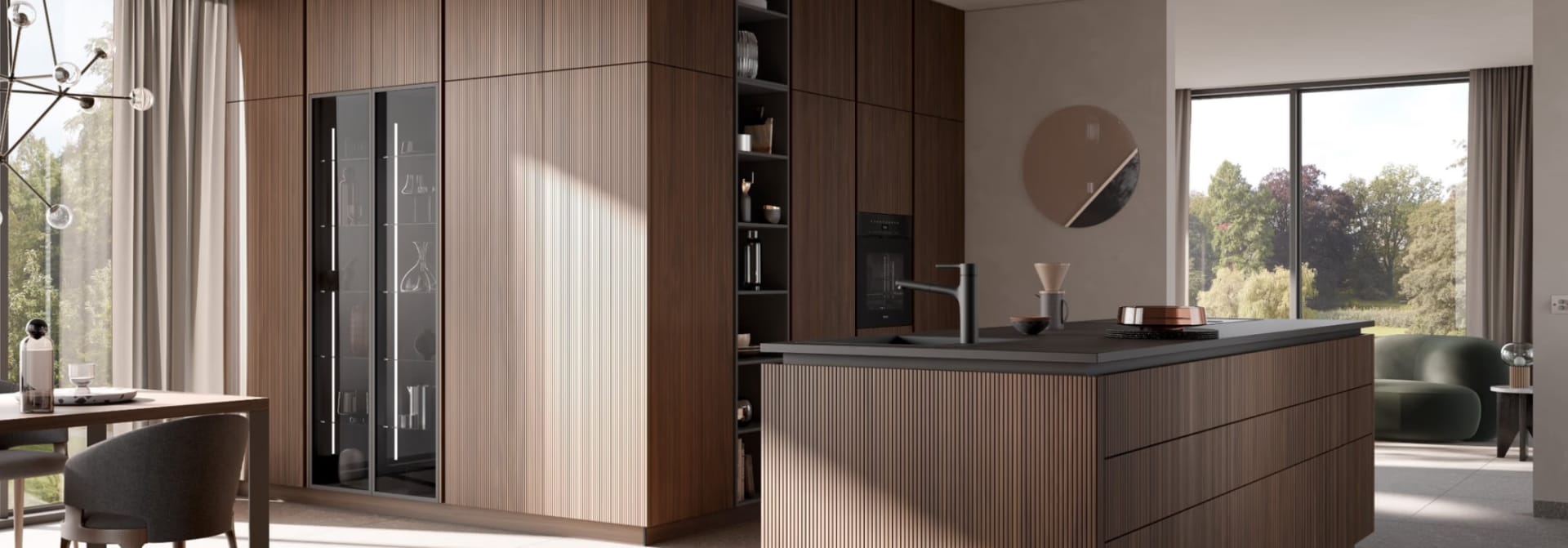
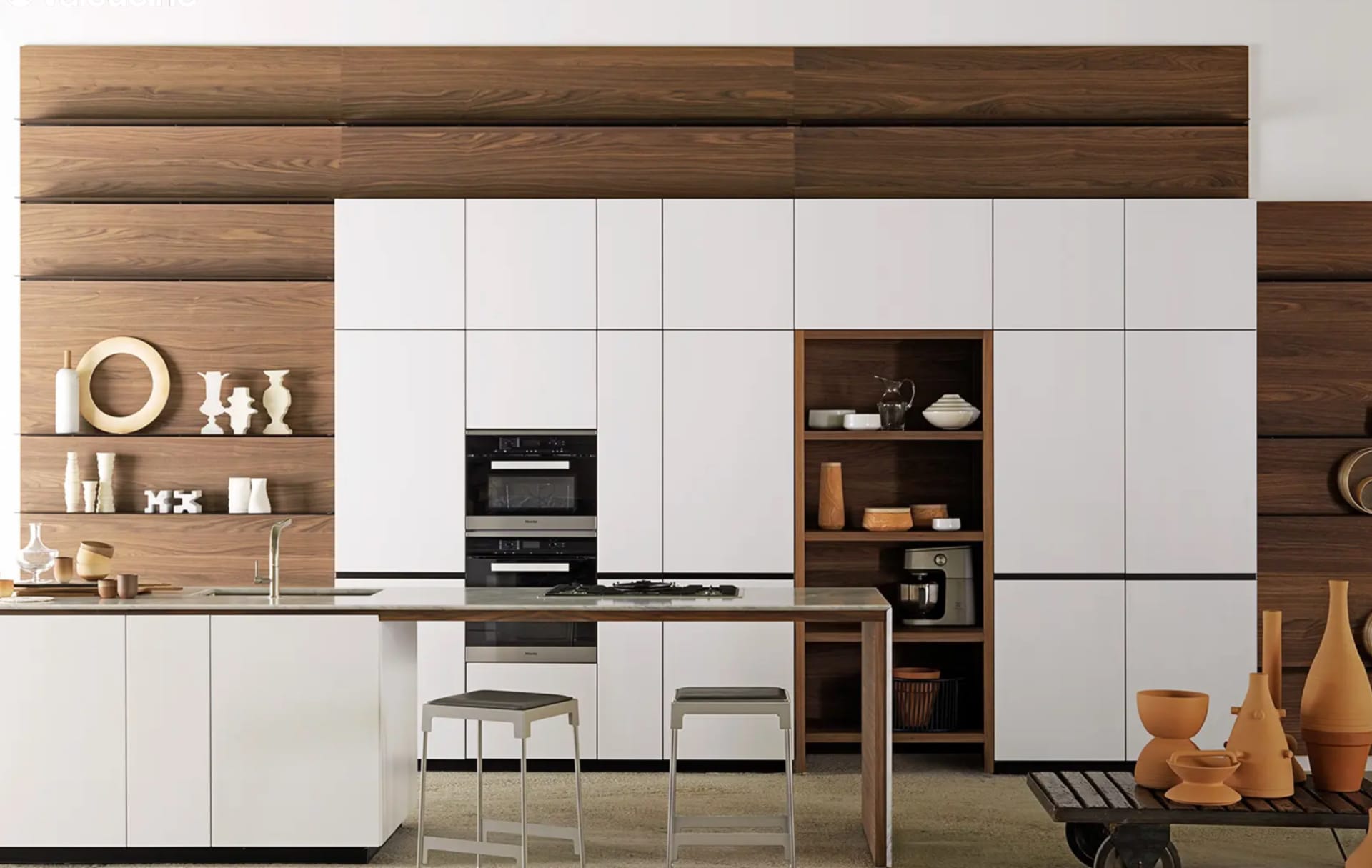
Frameless cabinetry — sometimes called European, full-overlay, or “Euro-box” construction — is built without the visible front rail and stiles that traditional cabinets use. The cabinet box itself carries the load, and the door covers the entire face of the box. The result is a cleaner, flush appearance and significantly more usable interior space.
Defining traits of frameless cabinets:
- Box construction: typically 5/8” or 3/4” plywood or thick-melamine sides and back, structurally engineered to carry door loads without a face frame
- Door coverage: 100% overlay — when closed, the doors form an unbroken plane across the cabinet run
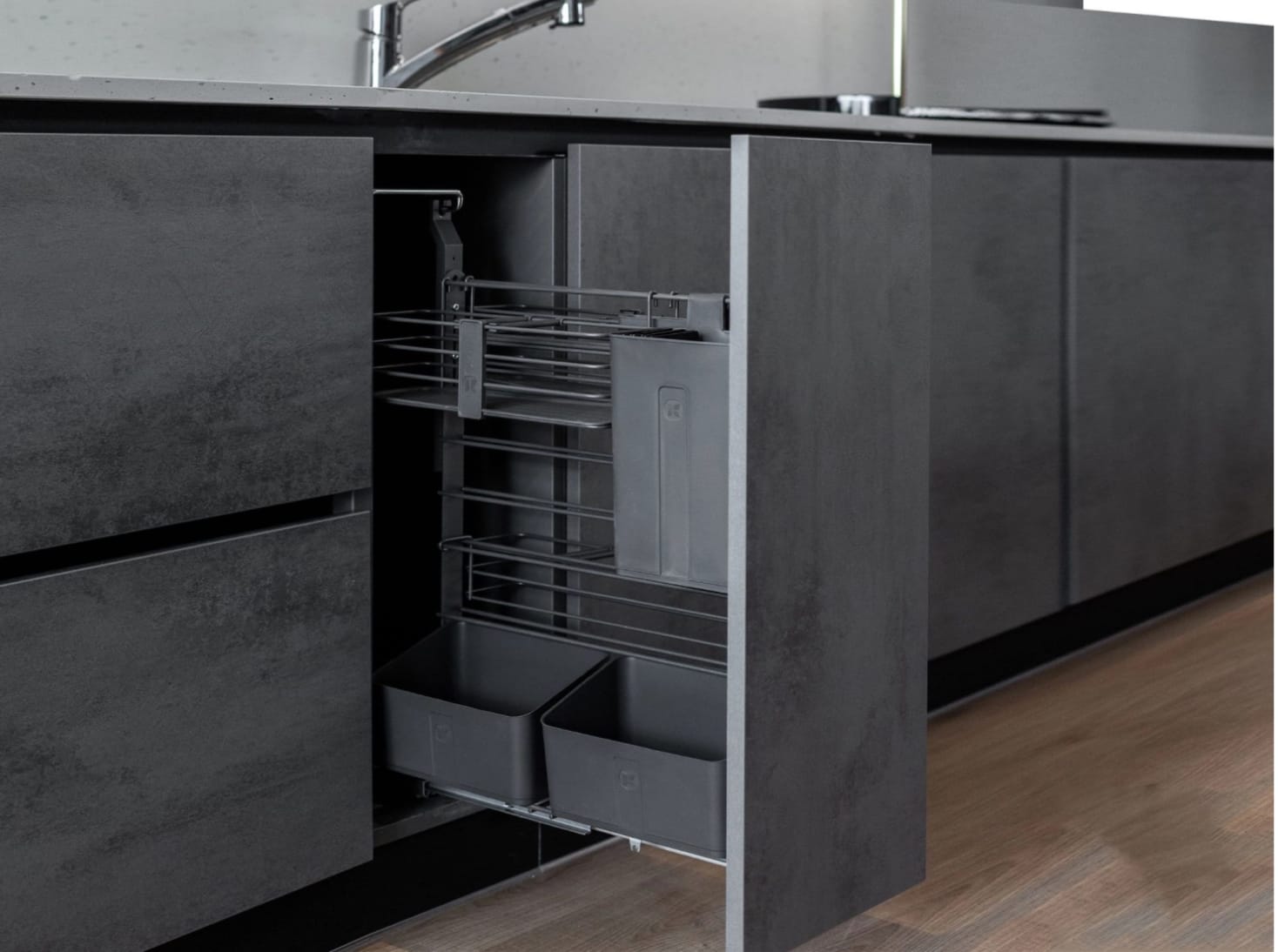
- Interior access: wider drawers and shelves; no center stile blocking the cabinet opening
- Hinges: concealed, six-way adjustable European cup hinges (Blum, Hettich, Grass)
- Door reveals: typically 2–3 mm — extremely tight tolerances
Frameless construction originated in post-WWII Germany, when cabinet shops needed to maximize storage in smaller homes. Today it dominates European kitchen cabinet manufacturing and is the construction standard at most high-design firms in LA and OC.
What Are Framed Cabinets? (Traditional American Box Construction)
Framed cabinetry — sometimes called American, traditional, or “face-frame” construction — uses a 1.5” hardwood frame attached to the front of the cabinet box. Doors mount to that frame rather than the box itself.
Defining traits of framed cabinets:
- Box construction: 3/8”–1/2” plywood sides reinforced by the front face frame, which carries most of the door load
- Door coverage: typically partial overlay (door reveals 1/2”–1” of frame), inset (door sits flush within the frame), or full overlay (covers most but not all of the frame)
- Interior access: center stiles between paired doors restrict drawer width and reduce reach into the cabinet
- Hinges: can use exposed barrel hinges (a hallmark of inset construction) or concealed Euro-style hinges
- Door reveals: wider, intentional — the visible frame is part of the aesthetic
Framed construction is foundational to American classic kitchen design. Shaker, transitional, traditional, and farmhouse styles all rely on the visible frame as a design element rather than something to hide.
Frameless vs. Framed Cabinets: Side-by-Side Comparison
The frameless vs framed cabinets decision comes down to four practical differences in construction, daily use, design fit, and cost.
| Factor | Frameless | Framed |
|---|---|---|
| Interior usable width | 10–15% more storage volume | Reduced by face frame and center stiles |
| Door overlay | Full overlay only | Partial, full overlay, or inset |
| Compatible aesthetics | Modern, contemporary, minimalist | Traditional, transitional, Shaker, inset luxury |
| Construction tolerance | Tight (2–3 mm reveals) | More forgiving (1/16”+ reveals acceptable) |
| Typical luxury-tier cost | $900–$1,800+ per linear foot | $700–$1,500+ per linear foot |
| Lead time | 10–20 weeks (often imported) | 6–14 weeks (often domestic) |
Door Overlay and Interior Clearance
Frameless gives you the most accessible interior — pull-out drawers reach within 1/8” of the box wall, and there’s no stile to navigate around when reaching for a stockpot. Framed construction with a center stile reduces drawer width by roughly 1.5”–3” per cabinet pair, which compounds across an entire kitchen. For households that cook seriously and store accordingly, the storage difference is the most-felt daily distinction between the two systems.
Material Cost and Lead Time
Frameless cabinets typically run 15–25% more expensive than framed at comparable build quality, primarily because the box must be heavier-gauge to carry door loads without a face frame. Imported European frameless lines also carry shipping and currency premium plus longer lead times — 10–20 weeks is typical, versus 6–14 weeks for domestic framed shops.
Design Styles Each Construction Suits
If you’re spec’ing a Shaker, transitional, or inset traditional kitchen, framed construction is the architecturally honest choice — the visible frame is part of what makes the style read correctly. If you’re spec’ing a modern, minimalist, or handle-less kitchen, frameless is essentially mandatory; framed cabinets cannot achieve a true seamless plane.
Durability and Hardware Requirements
Both constructions, properly built, will last 30+ years. Frameless cabinets place greater demands on hardware — the door’s full weight transfers through hinges into the box, so cup hinges must be precisely installed and rated for the door size. Framed inset construction places greater demands on the woodworker — doors must fit their openings within tolerances tighter than 1/16” for the life of the cabinet, accommodating seasonal wood movement.
Which Construction Type Do Luxury Kitchen Designers Prefer in LA and OC?
Across our 500+ projects in Beverly Hills, Newport Beach, Laguna, and the rest of LA/OC’s luxury submarkets, the split is roughly 60/40 frameless to framed — with the choice driven entirely by the home’s architectural language rather than designer preference.
- Modern coastal homes (Laguna, Newport, Manhattan Beach): frameless dominates. Clean planes, integrated appliances, and handle-less or push-to-open doors are the prevailing aesthetic.
- Traditional and Mediterranean estates (Beverly Hills, Hancock Park, Pasadena): framed inset construction is the architectural match. Visible frames, exposed brass or unlacquered nickel hinges, and panel or Shaker doors read as “right” against these architectures.
- Hybrid contemporary-classic homes: often mix both — frameless in the primary kitchen with framed millwork in butler’s pantries, mudrooms, and built-ins for visual variety.
The honest answer to “which is better” is “which is right for this home.” A frameless kitchen in a 1928 Spanish Revival looks imported; a framed kitchen in a steel-and-glass modern looks dated. The construction must serve the architecture.
How Cabinet Construction Affects Your Remodel Budget
For a 12-linear-foot luxury kitchen, the construction choice creates roughly a $30K–$60K swing at the bid stage:
- Framed semi-custom (domestic, plywood box, dovetail drawers): $9,000–$18,000 in cabinetry
- Framed fully custom (domestic shop, hand-finished): $18,000–$36,000
- Frameless semi-custom (domestic): $11,000–$22,000
- Frameless fully custom European import: $25,000–$60,000+
These figures cover cabinetry only — installation, stone, appliances, and lighting layer on top. For a complete picture of what an investment-level kitchen costs in our market, see our luxury kitchen remodel cost guide for LA.
A useful spec-stage benchmark: if a domestic cabinet bid comes in dramatically below the ranges above, ask about box thickness, drawer construction, hinge brand, and finish process. Quality differences live in the parts of the cabinet you don’t see — and they’re what separate a 30-year cabinet from a 10-year one. Look for KCMA-certified manufacturers as a baseline construction-quality signal.
How Yanis Remodeling Approaches Custom Cabinet Specification
Every Yanis project begins with a design consultation in which we walk your home, study its architectural language, and recommend the construction type that fits. We don’t push either direction by default — we push what the home asks for.
Our cabinetry program includes both European frameless systems and full-custom domestic framed millwork. For homeowners who want to understand the broader stock-vs-semi-custom-vs-bespoke landscape before specifying, our custom cabinetry guide on what makes bespoke worth it is the deeper read. The companion piece, our custom cabinetry buyer’s guide for Orange County and Los Angeles, walks through how to evaluate fabrication partners, lead times, and warranty terms.
To talk through your specific home and the construction type that fits, book a design consultation with our studio.
Frequently Asked Questions
Are frameless cabinets better than framed cabinets? Neither is universally better. Frameless cabinets offer 10–15% more interior storage volume and a cleaner modern aesthetic; framed cabinets are the architecturally correct choice for traditional, Shaker, transitional, and inset luxury styles. The right choice depends on your home’s architectural language, not on quality alone.
What is the difference between European and American kitchen cabinets? European cabinets are typically frameless (full-overlay) with concealed Blum or Hettich hinges and tight 2–3 mm reveals. American cabinets are typically framed with a visible 1.5” face frame, paired with either concealed or exposed hinges. For a deeper side-by-side, see our European vs. American kitchen cabinets complete guide.
Do frameless cabinets cost more than framed cabinets? Yes — at comparable build quality, frameless cabinets run roughly 15–25% more than framed, primarily because the box must be built heavier to carry door loads without a face frame. Imported European frameless lines also include shipping, customs, and currency premiums.
Can you mix frameless and framed cabinets in the same kitchen? Mixing within a single kitchen wall reads as inconsistent. However, many luxury homes use frameless in the primary kitchen and framed inset construction in adjacent butler’s pantries, mudrooms, or built-ins for visual layering. Done deliberately and limited to clearly separated spaces, this works.
Which is more durable, frameless or framed cabinets? Both, properly built, last 30+ years. Frameless cabinets place greater demands on hardware precision; framed inset cabinets place greater demands on the woodworker’s tolerances. Build quality and finish process matter far more than construction type.
What construction is best for a modern kitchen? Frameless is essentially mandatory for modern, minimalist, or handle-less kitchens. The clean planes and tight reveals that define contemporary kitchen design cannot be achieved with framed construction.
Spec the Right Cabinetry for Your Home
Bring us your floor plan, your home's architectural language, and your design references. We'll recommend the construction type — frameless, framed, or a deliberate mix — that fits.